Wondering why one home in Botetourt County gets strong offers quickly while a similar-looking property in another small town sits longer? In a county where historic town centers, residential pockets, and acreage properties all mix together, home value is rarely about square footage alone. If you are buying, selling, or simply trying to understand what your property might be worth, it helps to know how local value is really shaped. Let’s dive in.
Why home values vary in Botetourt County
Botetourt County is a blended rural-suburban market just north of Roanoke, with an estimated population of 34,144 as of July 2025. County planning materials describe it as scenic, historically significant, and made up of small towns with distinct character.
That matters because buyers do not view every part of the county the same way. A home in Fincastle, Daleville, or a residential area like Laymantown may compete in a different buyer pool, even when the homes share a similar size or layout.
Micro-location matters more than many owners expect
In Botetourt County, value often changes from one small-town setting to another. Northern areas are more closely tied to historical and agricultural character, while southern Botetourt and the Exit 150/Greenfield area serve as a commercial gateway with dining, lodging, entertainment, and residential options.
For you as a seller, that means location is not just a pin on a map. It affects who is likely to buy your home, what nearby properties count as true comparables, and how much convenience or setting a buyer may be willing to pay for.
Fincastle has a different value story
Fincastle is the county seat and a historic small town. Town materials note that Route 220 runs through town and carries more than 11,000 vehicles per day, and the town owns its own water and wastewater treatment facilities.
Those details can influence market perception. Depending on the property, buyers may weigh historical setting, visibility, traffic patterns, and utility access differently than they would in a lower-density area.
Daleville and Greenfield attract a different buyer mindset
Daleville and the Greenfield area function as a major economic-development node in the county. This area includes the county administration center and several major employers.
That kind of convenience can shape demand. Buyers who prioritize access to jobs, services, and commercial amenities may compare homes in this area differently than homes in more rural or purely residential pockets.
Laymantown and similar areas rely on setting
In places like Laymantown and other lower-density residential pockets, pricing often comes down to setting and convenience. Buyers may focus more on lot feel, privacy, drive times, and how the property compares with homes near more active county nodes.
That is why two homes with similar square footage can still land at different prices. The context around the house can be just as important as the house itself.
Recent sold comps usually matter most
When people try to estimate value, they often start with a county tax assessment or an online estimate. Those can be useful reference points, but they are not the same as current market value.
In appraisal terms, market value is the most probable price a property should bring in a competitive and open market. The sales-comparison approach starts with recent sales of similar local homes, then adjusts for differences in location, quality, and condition.
Why sold comps beat assessments for pricing
Botetourt County reassesses real estate every four years, and the county states the last reassessment was in 2024. The county’s GIS and land-card system is helpful for parcel-level background, but assessed value is not a substitute for a current market analysis.
If you are pricing a home for sale, recent comparable sales should carry more weight. Assessments can help anchor the conversation, but sold comps are what show how buyers have actually responded to similar properties in the current market.
Why comps can be harder in small towns
In lower-density areas, there are often fewer truly similar sales. Research from FHFA notes that the number of comparable properties can vary significantly by location density.
That means rural homes, homes with acreage, or unusual properties may need a wider search radius to build a reliable comp set. In Botetourt County, pricing work can also extend beyond the immediate ZIP code when a home is scarce or difficult to match.
Acreage does not add value evenly
Acreage is one of the biggest reasons home values in Botetourt County can be hard to generalize. More land does not always translate into a simple dollar-for-dollar increase.
County planning documents emphasize conservation, agricultural innovation, rolling farmland, and wooded mountain settings. In real terms, that means the quality and usability of land often matter more than the raw acre count.
What buyers look at with land
When buyers compare acreage properties, they often look closely at:
- Usable land versus steep or difficult terrain
- Road frontage
- Driveway access
- Topography
- Outbuildings
- Flexibility for future use
Five usable acres can be much more valuable than five acres that are hard to access or difficult to use. If your property includes land, it is important to separate house value from land value instead of lumping everything together.
Well and septic can influence negotiations
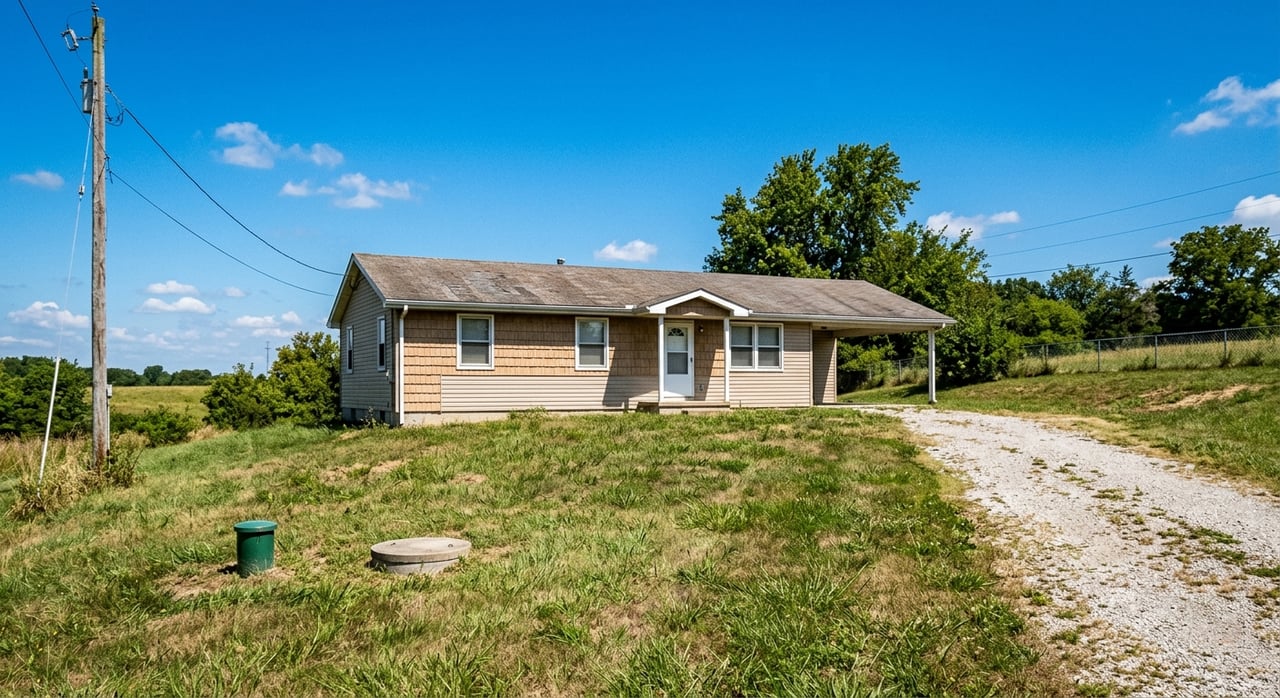
Many Botetourt County properties rely on private well and onsite septic systems. These features do not automatically hurt resale, but they do affect buyer diligence.
The Virginia Department of Health states that it does not require activities connected with the buying or selling of property with private wells or onsite systems. At the same time, it recommends that prospective buyers test private well water and notes that failing-system repair permits are not transferable in many cases.
Good records can support value
If your home has a well or septic system, buyers will usually feel more confident when records are organized and easy to review. Helpful information may include:
- System age
- Service and maintenance records
- Pump history
- Tank history
- Any recent inspections or repairs
For sellers, transparency often reduces friction. A well-documented system can make negotiations smoother than a system with little paper trail.
Portal prices are helpful, but limited
If you check public real estate portals, you may see different market numbers for Botetourt County. Recent snapshots have pointed in a similar direction, but they are not identical.
Realtor.com reported a March 2026 median listing price of $395,000 and a median 39 days on market. Redfin reported a recent median sale price around $390,000 and roughly 70 days on market, while Zillow reported a February 2026 median sale price of $321,968.
Why those numbers do not always match
These sources measure slightly different things, and they do not always use the same methodology. One may emphasize listings, while another focuses on closed sales or a different time frame.
For you, the takeaway is simple: portal data can provide directional context, but it should not replace a local comparative market analysis built from actual sold comps.
A practical way to estimate value
If you want a realistic picture of what a home in Botetourt County’s small towns may be worth, the best approach is usually a step-by-step one. This is especially true when the property includes acreage, a rural setting, or limited nearby comps.
A defensible pricing process often looks like this:
- Identify the narrowest relevant set of recent sold comps
- Separate house value from land value
- Account for utilities like well and septic
- Evaluate site features such as access, frontage, and topography
- Test the result against current buyer demand and local days on market
In a market with fewer close matches, the right price is often the one that brings the most qualified early interest. It is not always the highest number that seems possible on paper.
What this means if you are selling
If you own a home in Fincastle, Daleville, Laymantown, or another Botetourt County small-town setting, pricing should be local and specific. A broad county average will not tell the whole story.
You will usually get a better result when pricing reflects how buyers compare your property in real life. That means looking closely at micro-location, condition, land usability, utility setup, and the strength of the available comp set.
What this means if you are buying
If you are buying in Botetourt County, understanding local value can help you make stronger offers and avoid overreacting to online estimates. A property with acreage, outbuildings, or private utilities may need more careful review than a home in a more typical suburban setting.
The more you understand how local homes are compared, the easier it is to judge whether a price feels supported. That kind of clarity helps you move with confidence.
If you want clear, data-driven guidance on pricing a home in Botetourt County or evaluating value in one of its small towns, Alexandra Taylor offers local insight, careful analysis, and practical support every step of the way.
FAQs
How are home values different in Botetourt County small towns?
- Home values can vary based on micro-location, buyer demand, available comps, convenience, land features, and utility setup, even when homes have similar square footage.
Should I use the Botetourt County tax assessment to price my home?
- The county assessment is useful background, but recent sold comparable homes are usually a better guide for setting a list price.
Does acreage always increase a home’s value in Botetourt County?
- No. Usability, access, topography, frontage, and future-use flexibility can matter as much as, or more than, the total number of acres.
Do well and septic systems hurt resale value in Botetourt County?
- Not automatically, but they can affect buyer diligence and negotiations, especially if records are limited or systems are older.
Why might a home in Fincastle price differently than one in Daleville or Laymantown?
- Each area can attract a different buyer pool and comp set based on setting, convenience, traffic patterns, utility access, and proximity to county commercial nodes.